
Researchers at Northumbria University have been instrumental in the creation of a centre for innovation and entrepreneurship in a low-income area of Africa.
The centre, which was developed by a team from Northumbria University in collaboration with Enugu State University of Science and Technology in Nigeria, together with other universities in the region, has already developed programmes to address energy shortages and educate local people on low incomes.
Advertisement

The Innovation and Entrepreneurship Centre for Rural Sustainable Development was funded by the Royal Academy of Engineering as part of the Higher Education Partnership in Sub-Saharan Africa (HEPSSA) programme, which aims to encourage collaboration between those in academia, local industries and local governments in order to promote sustainability.
This multidisciplinary partnership approach uses the expertise of academics from a variety of backgrounds, from engineering to social science, linking education and industry, as well as engaging students with real-world projects.
Advertisement

‘As developing economies, sub-Saharan African countries are facing a formidable challenge in navigating through a complex energy-demand–supply gap,’ said Ulugbek Azimov, an associate professor of mechanical engineering who was Northumbria’s lead on the project. ‘Although the main income in rural communities is agriculture, it requires a huge amount of energy to cultivate healthy crops and the region’s energy supply is highly centralised, coupled with a lack of infrastructure. The accumulation of waste and its disposal also pose potential environmental and health threats in the area.’
The centre was designed to create green jobs and healthy communities, and support sustainable economic growth by applying renewable-energy technologies, providing green materials and waste-to-energy solutions, and introducing sustainable agriculture into rural communities.
Advertisement
‘For individuals, this project will contribute to a cleaner environment and high-quality education and well-being,’ Azimov said. ‘For organisations, it will initiate new research and development projects and investments in renewable energy, waste utilisation and sustainable agriculture. And for local economies, it will contribute to the government policy to create high-standard living conditions in remotely populated areas.’
So far, the centre has trained more than 50 local entrepreneurs and university students in managing and converting local waste, and scores more on green-construction methods and agriculture, helping them to plan, design and build appropriate small-scale renewable energy systems using techniques such as solar-energy harvesting, biomass waste processing and bio-gas production.
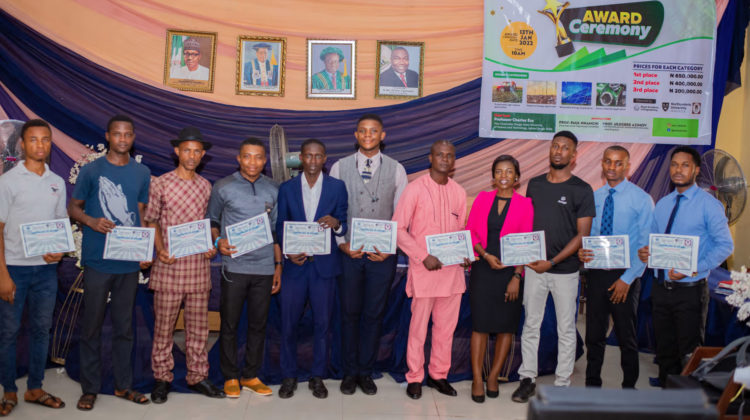
The programmes have been so successful that a regional competition has already been held, with cash prizes presented to participating local companies, entrepreneurs, non-profit groups, NGOs, students and individuals, in order to help them further develop their projects and ideas.
Advertisement
Besides training, the centre has also developed research infrastructure in the city of Enugu in order to enable future projects. ‘These newly established facilities will provide a solid platform for the successful implementation of various green-energy and sustainability projects in sub-Saharan Africa,’ Azimov said.