

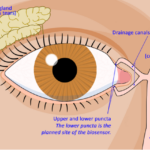
A surgeon-engineer at the University of Washington is helping to design a rice-grain-sized sensor that will sit in a tear drain and monitor biomarkers. ‘We tear all the time, not just when we cry, and our tears are actually very similar to blood,’ said Tueng Shen, a UW Medicine eye surgeon and bioengineer. ‘Just like saliva and sweat, tear film carries biomarkers – proteins, … [Read more...] about Designing a device to track what’s in tears
Medical
Researchers use soft robotics to help ease cancer recovery
A research team at the University of Waterloo in Ontario is helping cancer survivors manage lymphedema with a smartphone-sized, portable compression sleeve that lets patients move freely during therapy. As cancer treatments become more advanced and personalised, survival rates for breast and brain cancers continue to rise. With more patients living longer after treatment, … [Read more...] about Researchers use soft robotics to help ease cancer recovery
Remote robotic surgery carried out in UK first

A King’s College London professor of surgery and urology has used remote robotic surgery for the first time in the UK to complete a prostate removal on a patient more than 2,400 kilometres away. Working from the London Clinic, Professor Prokar Dasgupta used a console to guide a robot equipped with a 3D camera and three additional instrument arms to remove Paul Buxton’s … [Read more...] about Remote robotic surgery carried out in UK first
New funding for innovative device to treat water on the brain

The US National Institutes of Health (NIH), through its BluePrint MedTech Optimizer Project Awards, has awarded a multidisciplinary team at the University of Pittsburgh an additional US$1.2million in federal funding to accelerate regulatory advancement and commercialisation of a novel, minimally invasive foetal shunt designed to treat foetal hydrocephalus, also called ‘water on … [Read more...] about New funding for innovative device to treat water on the brain
Researchers break the mould with new prosthetic design
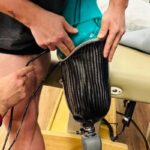
Researchers at Simon Fraser University in Canada have developed a new, fully customisable 3D-printed socket design that they say is set to transform the prosthetics industry. The reimagined limb socket interface combines highly personalised pressure mapping with AI software and a lighter infill, creating a highly customised prosthetic that’s more comfortable to wear, for … [Read more...] about Researchers break the mould with new prosthetic design