
A University of Central Florida (UCF) engineering scientist is part of an international team of experts working to design and build oyster-based shoreline protection for US coastlines.
The research is being conducted as part of a US$12.6 million Defense Advanced Research Projects Agency-funded initiative to develop self-repairing, biological and human-engineered reef-mimicking structures. The study is led by Rutgers University and involves scientists from the USA and Australia. UCF will receive around US$800,000 for its participation in the initiative.
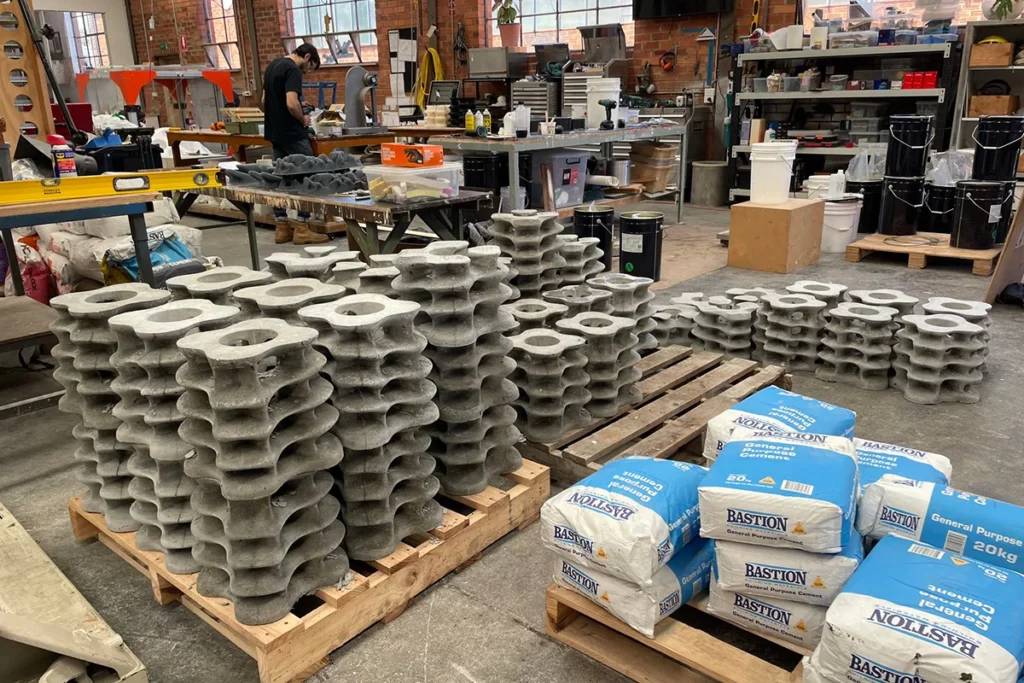
The reef structures, which UCF is working to develop, will be utilised to reduce coastal flooding, erosion and storm damage, which endangers civilian and Department of Defense infrastructure and personnel. To create a healthy ecosystem, the project design also supports the recruitment of non-reef-forming organisms such as marsh and seagrasses.
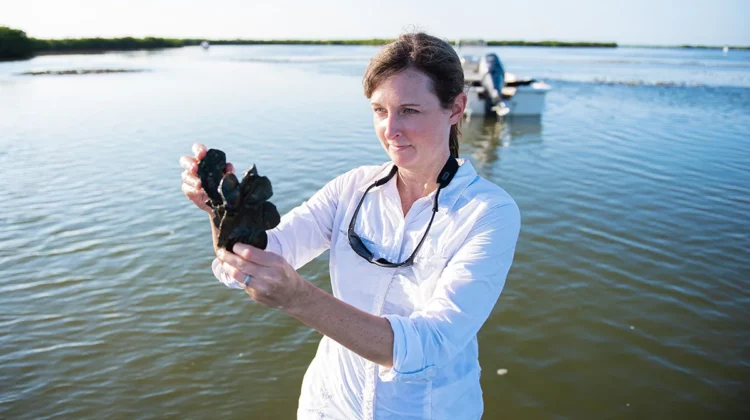
‘We’re not only focusing on the oyster reef, but we’re also bringing in a mosaic habitat concept,’ said Kelly Kibler, an associate professor in the Department of Civil, Environmental and Construction Engineering (pictured above). ‘So, we’re not only working with one species but recognising that multiple species that inhabit the intertidal zone work together to create further resilience.’
Advertisement

The first of two 50-metre reef installations will be installed in the East Bay of St Andrews Bay, near Panama City in the Florida Panhandle, to enhance oyster recruitment.
The Reefense project is made up of three distinct teams. The Rutgers University team will concentrate on a shellfish reef, while the University of Miami and the University of Hawaii teams will work on corals.
Kibler’s team will study the reef structure’s pre- and post-implementation conditions, as well as how the reef and habitat mosaic influence sediment flow near the shoreline. ‘This type of natural infrastructure design project is especially important to a state such as Florida, which is vulnerable to climate change impacts and rising sea level,’ Kibler said.
The project is divided into three stages that comprise design, implementation and monitoring iterations. The oyster reef group is currently in Phase 1 and is planned to enforce the first structure in Phase 2, in 2024.
According to Kibler, the long-term success of the reefs will be determined by oyster recruitment and survival. She believes that if the project proves to be effective, the structures might be used in numerous parts of Florida and around the world.
Advertisement
‘We hope to have a cost-effective, transferable design that would be taken up by communities, homeowners and landowners,’ Kibler said.