
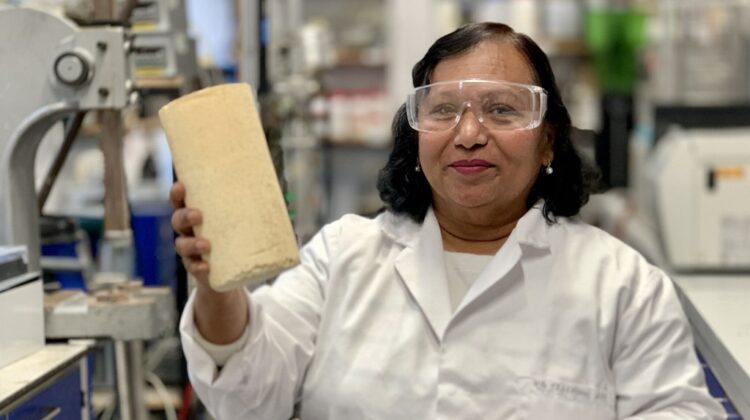
Researchers at the University of Bath have invented a new form of high-performance air purifier that promises zero harmful waste.
Key to the purifier and how it works is FOAM3R filter technology, patented by the university, which is described as a highly adaptable disruptor technology for microbial, carbon dioxide and volatile organic compound (VOC) odour removal.
FOAM3R can be used to produce multi-functional foam structures for a wide range of applications, including aircraft cabins, in-car air filters, ship and boat cabins, residential heating, ventilation and air-conditioning, home air purifiers and respirator and breathing apparatus.
The innovative foam is comprised of high-temperature polymer and active media such as selective adsorbents to capture contaminants and antibacterial agents to combat microbes. It’s mouldable and lightweight, energy efficient and anti-bacterial, and the addition of active metals into the structure makes it 99.999 per cent efficient in removing common bacteria and viruses.
Advertisement

It also boasts a tailorable composition that allows for targeted capture of a wide range of small to large VOCs – some of which are responsible for unpleasant smells, while others can be harmful to human health – and high-performance removal of carbon dioxide.
The design of the home air purifier, currently in the prototype stage, features two cylindrical columns of the FOAM3R material. During operation, one column is used to purify the air while the other ‘regenerates’ for reuse through heating, restoring the foam’s sorbent properties.
The process also removes collected pollutants and dead microbial debris captured in the air through heating and uses cooling and condensation to recover volatile components, which are collected as a liquid that’s safe to pour away.
FOAM3R is created in a simple one-step manufacturing process and can be shaped into a variety of form factors. It can also be retro-fitted into existing technology and is more energy efficient than comparable carbon-granule-based air-purification systems.
According to Professor Semali Perera from Bath’s Department of Chemical Engineering (pictured above), the air purifier design and FOAM3R technology could present a breakthrough in air purification. ‘We have created a highly efficient design, with none of the disposable cartridges or waste that we see in many commercial air purifiers, so there are several benefits to what we’ve created,’ she said. ‘Our next step is to engage potential commercial partners with the requisite expertise to bring our invention to the market.’
Advertisement
The research team is seeking partnerships to help develop the technology. Interested parties can contact Irene Henning, technology transfer manager, at [email protected].