
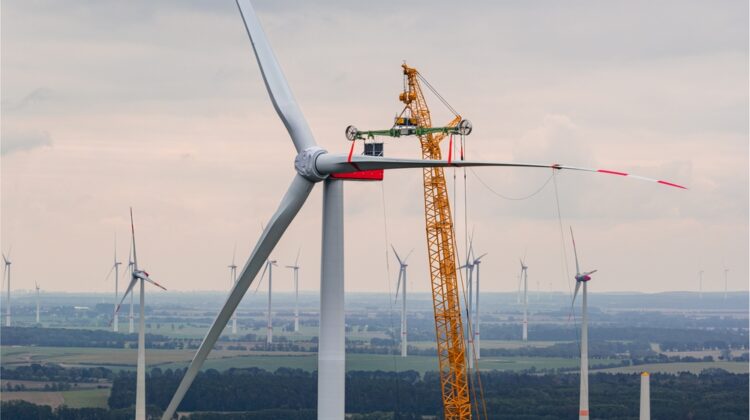
An offshore wind turbine is a generating machine, but it is also a substantial collection of manufactured parts. Behind the blades and towers are castings, forged rings, fasteners and drivetrain components, each requiring businesses with the equipment and expertise to make them. A new report suggests UK manufacturers could supply considerably more of these parts than they do today.
Published by the Offshore Wind Growth Partnership (OWGP) and the Cast Metals Federation (CMF), the UK Castings & Forgings Bill of Works identifies a potential £14.6 billion contribution to the UK economy by 2050. Realising that opportunity would require targeted investment to expand domestic manufacturing capability and secure a greater share of offshore wind supply chains.
The assessment forecasts demand for more than two million tonnes of cast and forged components across the UK’s offshore wind pipeline between 2026 and 2050. Together, these represent a market worth approximately £36 billion, covering equipment used in turbines, foundations, substations and other infrastructure.
Casting and forging provide different ways of turning metal into useful components. Casting involves pouring molten metal into a mould, allowing manufacturers to produce complex shapes. Forging shapes metal under compressive force. Both processes are important to the manufacture of substantial, heavily loaded components, although their suitability depends on the material, geometry and performance required.
Advertisement

The report examines where UK businesses already supply offshore wind, where existing manufacturing expertise could be applied more widely and where additional investment would be needed. Its component-by-component approach is intended to give manufacturers, developers and investors a clearer picture of the opportunities behind the overall market figures.
UK manufacturers currently operate in markets representing approximately 8 per cent of total castings and forgings demand. The report concludes that existing capability could increase participation to around 14 per cent. Investment in further manufacturing capability could raise that figure to as much as 37 per cent of demand by weight.
That distinction matters. Some opportunities involve making better use of capabilities already present in UK industry. Others would require businesses to develop their ability to manufacture different or larger components. The report identifies forged rings, turbine hub castings and drivetrain components among the areas where targeted investment could open additional markets.
‘This Bill of Works Report clearly sets out the scale of the opportunity for the UK foundry and forging industries to contribute significantly more to the offshore wind sector and demonstrates that the UK’s foundries and forges have far more to offer the sector than is often recognised,’ said Lee Marshall, chief executive of the Cast Metals Federation.
The assessment uses the offshore wind Industrial Growth Plan’s Make or Buy framework to identify where domestic manufacturing could play a greater role. It estimates that UK businesses have, or could develop, the technical capability to supply components representing 41 per cent of the market by value.
Advertisement
The resulting £14.6 billion figure refers to potential gross value added, a measure of economic contribution. It is an opportunity extending to 2050, dependent on the development of manufacturing capability and participation in future projects. The report provides a basis for deciding where investment might be directed, rather than a guarantee of orders.
There is already an industrial foundation to build on. UK companies supply offshore wind fasteners, sacrificial anodes and cable protection systems. The report also highlights Cooper Turner Beck, which manufactures fasteners in the UK for customers in the global offshore wind market, as an example of the export opportunities available.
Further opportunities are identified in nacelle components, electrical systems and floating offshore wind. For manufacturers, the potential market therefore extends beyond supplying projects in UK waters. Developing competitive products and production capabilities could also allow businesses to serve overseas projects.
‘This Bill of Works provides that evidence,’ said Anil Sayhan, managing director of OWGP. ‘It offers government, developers, OEMs and suppliers a clear, component-level picture of where UK foundries and forgers have the capability to supply today, and where targeted investment could unlock even greater value.’
The geographical spread of the industry could make that investment significant beyond individual factories. Foundries and forges are established across Yorkshire and the Humber, the West Midlands, the North East, Scotland and Wales. Expanding their role in offshore wind could support regional manufacturing activity while retaining industrial skills and strengthening domestic supply chains.
For engineering businesses, the immediate value of the assessment is its detail: identifying which components are needed, which can already be made and which would require further development.