
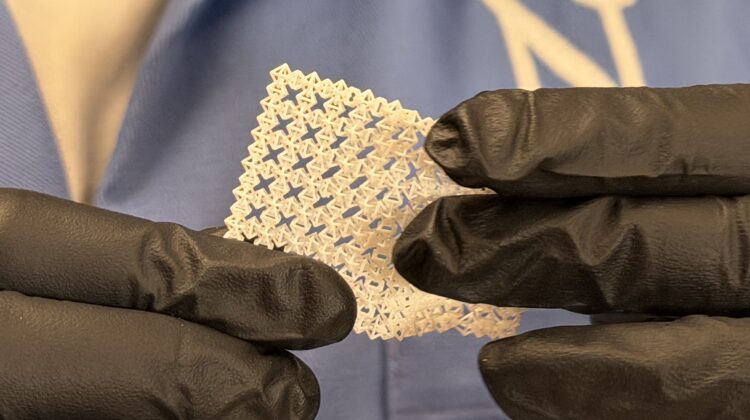
The method, called direct ink additive lithography (DIAL), addresses a familiar compromise in 3D printing: balancing manufacturing speed, fine detail and material choice.
Conventional extrusion printing pushes material through a nozzle, building objects one line at a time. It accommodates a broad range of inks, but producing intricate features can be slow. Light-based systems harden selected areas of liquid resin more quickly, although they typically require thinner, free-flowing materials.
DIAL combines elements of both approaches. A nozzle deposits thick ink onto a flat surface before a blade spreads it into a uniform layer just 50 micrometres thick. A projector then shines patterned light onto the layer, hardening selected areas. Repeating the sequence builds the object.
In one demonstration, the researchers printed a porous, grid-like structure in 30 minutes, compared with 124 minutes using conventional extrusion. The DIAL-printed structures also had sharper features and fewer defects.
Advertisement

The team produced lattices with walls just 150 micrometres thick, alongside interlocking chainmail and structures combining different inks in successive layers.
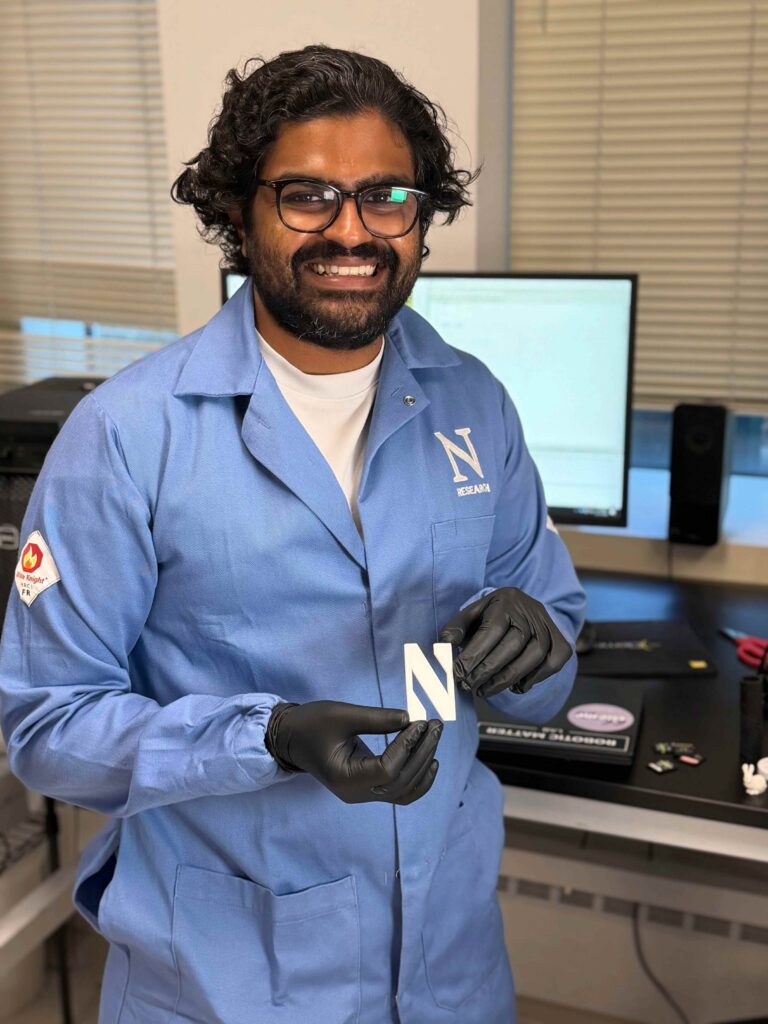
“DIAL can produce parts that have been challenging if not impossible to make with other 3D printing methods,” said Ryan Truby, the study’s senior author and an assistant professor of materials science and engineering and mechanical engineering.
A key feature is the ink’s ability to support the object during printing. Delicate bridges and overhangs often need separately printed scaffolding, which adds material and takes time to remove. Removing supports can also damage fine features.
For DIAL, the researchers mixed light-curable resin with silica nanoparticles to create an ink that holds its shape until sufficient force makes it flow. The blade spreads the material, which quickly regains its stiffness once the blade passes.
Unhardened ink around the printed features therefore provides support as the object takes shape. After printing, this material is washed away. Excess ink remaining on the printing surface can be collected and reused.
Advertisement
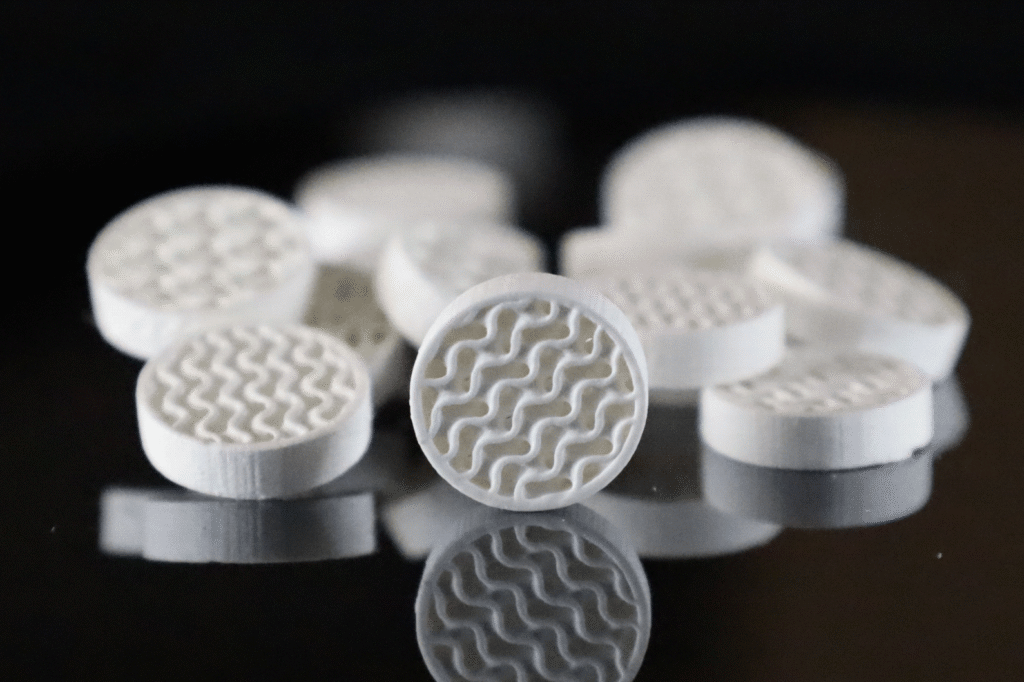
The researchers also tested inks with functions beyond providing structural support. Using an electrolyte formulation being investigated for energy-storage applications, they printed 15 small porous lattices in a single 15-minute run.
A second formulation used a hydrogel, a soft, water-rich material. The team printed small containers with microscopic surface features modelled on equipment used to grow cells and study tissue development.
The researchers are now exploring how DIAL could produce flexible components for robots, medical devices and structures that withstand the extreme conditions of space travel. Its ability to shape electrolyte materials could also support new energy-storage designs, while the hydrogel demonstrations point towards equipment for growing cells and studying tissue development. These applications remain under development, but show how the process could give engineers more freedom to combine a material’s function with a complex shape.
The study was published in Science Advances.