
Stainless steel has spent more than a century earning its reputation as one of engineering’s most dependable materials. From bridges and chemical plants to kitchen sinks, its resistance to corrosion has made it the obvious choice wherever metals are expected to survive harsh environments.
There has always been a catch, though. Push stainless steel into the high electrical voltages needed for water electrolysis and that protection begins to fail. It’s one of the reasons many green hydrogen systems still rely on expensive titanium components instead.
Researchers at the University of Hong Kong believe they have found a way around that limitation.
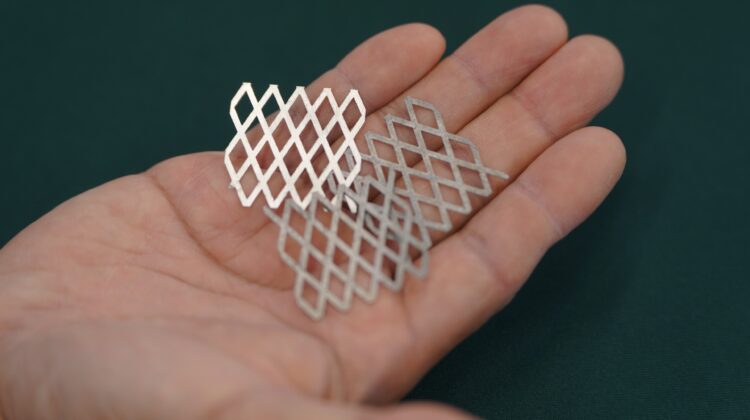
The team has developed a new alloy, known as SS-H2, that remains stable under the demanding electrochemical conditions used to produce hydrogen. Reported in Materials Today, the material combines the corrosion resistance expected of stainless steel with performance that the researchers say rivals titanium, while costing considerably less.
Advertisement

Hydrogen produced by electrolysis is widely seen as a key technology for decarbonising industries that are difficult to electrify directly. The process uses electricity to split water into hydrogen and oxygen, ideally using renewable energy. However, the electrolysers themselves operate in an aggressive chemical environment, particularly when seawater is involved, where conventional stainless steel rapidly reaches its limits.
Normally, stainless steel protects itself by forming a thin chromium-rich oxide film across its surface. That passive layer prevents further corrosion under most operating conditions. At the high electrical potentials required for water oxidation, however, the protective film begins to break down, allowing corrosion to accelerate.
The Hong Kong researchers discovered a way to extend that protection by creating what they describe as a sequential dual-passivation mechanism. Alongside the familiar chromium oxide layer, the alloy develops a second protective layer rich in manganese. Working together, the two layers allow the material to withstand electrical potentials beyond those normally tolerated by conventional stainless steels, even in chloride-rich environments such as seawater.
The result challenges a long-held assumption in corrosion science. Manganese has traditionally been regarded as detrimental to stainless steel’s corrosion resistance, yet in SS-H2 it appears to play a key role in protecting the material under high-voltage operating conditions.
The implications could be significant for hydrogen production. Today’s proton exchange membrane (PEM) electrolysers typically rely on titanium components, often coated with precious metals such as platinum or gold to withstand the harsh operating environment. While effective, those materials contribute substantially to the overall cost of the system.
Advertisement
According to the researchers, replacing some of those structural components with SS-H2 could reduce material costs by around 40 times while delivering comparable corrosion resistance. Although further engineering work will be needed before the alloy can be widely deployed, the team has already begun producing wire from the material at industrial scale in collaboration with a manufacturing partner.
There is still some way to go before the steel finds its way into commercial electrolysers. Laboratory samples must be translated into practical components such as meshes and porous structures capable of operating reliably over many years. Even so, the work highlights how advances in materials engineering continue to shape the economics of the hydrogen sector.
Green hydrogen is often discussed in terms of renewable electricity and electrolyser efficiency. Less attention is paid to the materials that make those systems possible. Yet sometimes, improving an established material rather than inventing an entirely new one can have just as much impact.