
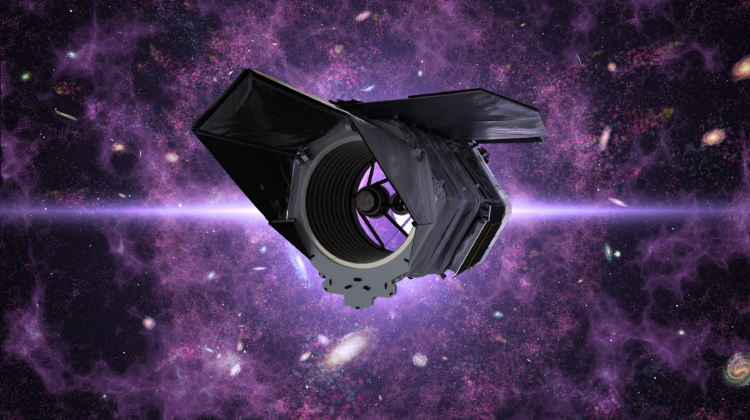
Space telescopes have traditionally faced a trade-off. They can look deeply into a small patch of the universe, revealing distant galaxies in remarkable detail, but surveying enormous areas of sky at that resolution takes time. NASA’s newly launched Nancy Grace Roman Space Telescope has been designed to change that equation.
Roman lifted off from Kennedy Space Center in Florida on 30 August aboard a SpaceX Falcon Heavy rocket. It is now beginning a three-month journey towards the second Sun-Earth Lagrange point, or L2, around one million miles from Earth. Once there, the telescope will begin investigating some of astronomy’s biggest unanswered questions, including the nature of dark matter and dark energy and the abundance of planets beyond our Solar System.

What makes Roman particularly interesting is the amount of sky it can see at once. Its main scientific instrument is a 300-megapixel infrared camera containing 18 4K detectors, designed to capture large panoramas while retaining the sharpness needed to pick out distant astronomical objects.
The telescope has also been engineered to move quickly from one observation to another without sacrificing optical stability. NASA expects that combination of a wide field of view and rapid repositioning to allow Roman to survey the universe around 1,000 times faster than the Hubble Space Telescope.
Advertisement

That does not make Roman a replacement for Hubble. The two telescopes approach the sky differently. Hubble can concentrate on relatively small areas in extraordinary detail; Roman is intended to take that kind of sharp imaging and apply it across a much wider field. Instead of studying a handful of galaxies at a time, astronomers will be able to examine populations numbering in the millions.
The result will be an enormous flow of information. Roman is expected to transmit around 1.4 terabytes of data to Earth every day once science operations begin, the highest daily data rate yet for a NASA astrophysics mission. Machine learning and artificial intelligence will help astronomers sift through those observations, looking for objects or events worth examining more closely.
Roman also carries an experimental Coronagraph Instrument. Finding an exoplanet beside its host star is rather like trying to spot a firefly next to a searchlight: the star can be billions of times brighter than the planet. A coronagraph suppresses much of that light, allowing much fainter objects nearby to emerge. Roman will demonstrate the technique by imaging planets similar in size to Jupiter, helping develop technology that could eventually be used to photograph smaller, potentially Earth-like worlds.
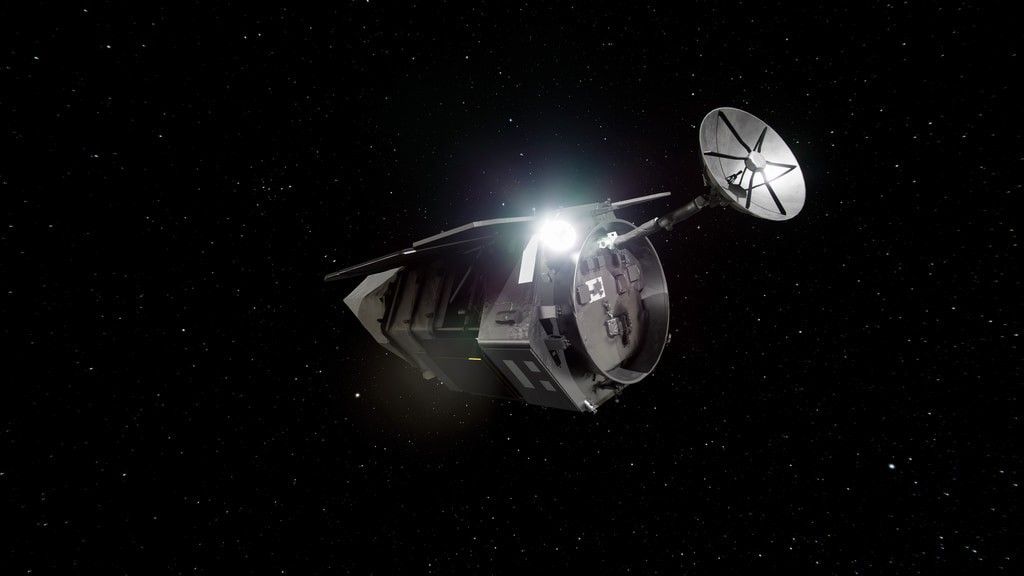
For now, however, Roman still has a million-mile journey ahead of it. Its destination at L2 offers a relatively stable gravitational environment, allowing the spacecraft to maintain its position with limited fuel while keeping the Sun, Earth and Moon on broadly the same side of the observatory.
NASA expects Roman’s first images in early 2027. And although the telescope has been built to answer specific questions, its greatest contribution may come from something nobody has thought to ask yet. Surveying huge areas of the universe at a level of detail previously confined to much smaller views means Roman will not simply be looking deeper into space. It will be giving astronomers a much bigger picture of what is out there.