
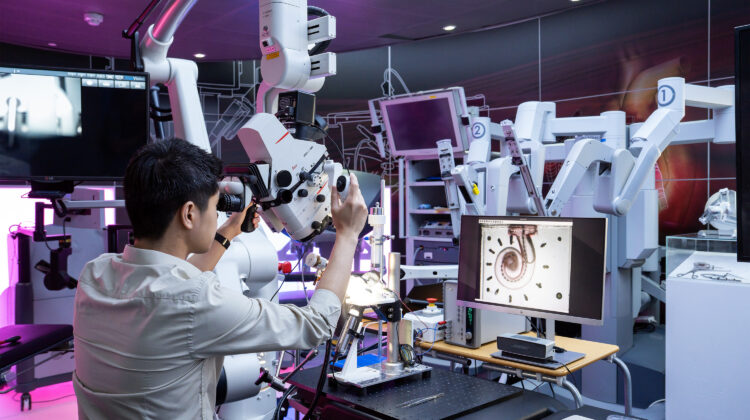
Robotic surgery can give surgeons greater precision and consistency, but many of the most advanced systems remain concentrated in specialist centres. A new collaboration between engineers at Imperial College London and Smith+Nephew aims to widen access by accelerating the development of technologies for robotic musculoskeletal surgery.
The five-year partnership has established a new university technology centre within Imperial’s Hamlyn Centre for Robotic Surgery. It will bring academic researchers together with engineers and clinicians from Smith+Nephew, allowing technologies to be developed with their eventual clinical use in mind from an early stage. It is the first centre of its kind established at a university by Smith+Nephew and Imperial’s first industry research centre dedicated to medical technology.
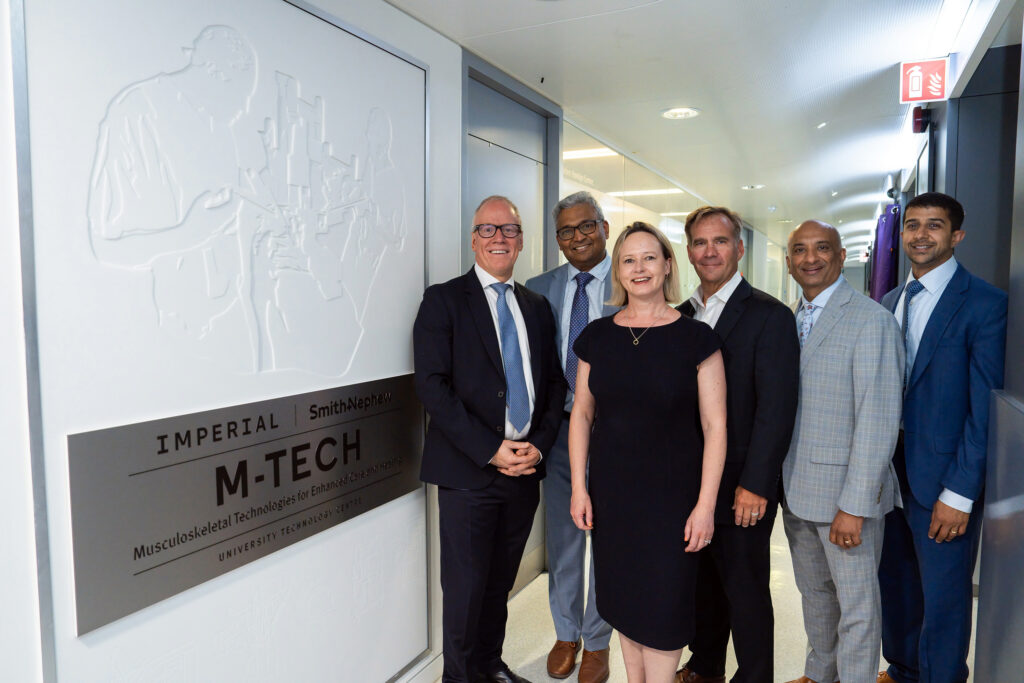
Rather than developing university research independently and later licensing the technology to industry, engineers from both organisations will work alongside one another. The idea is to shorten the journey between an engineering breakthrough in the laboratory and a technology that can eventually be used in an operating theatre.
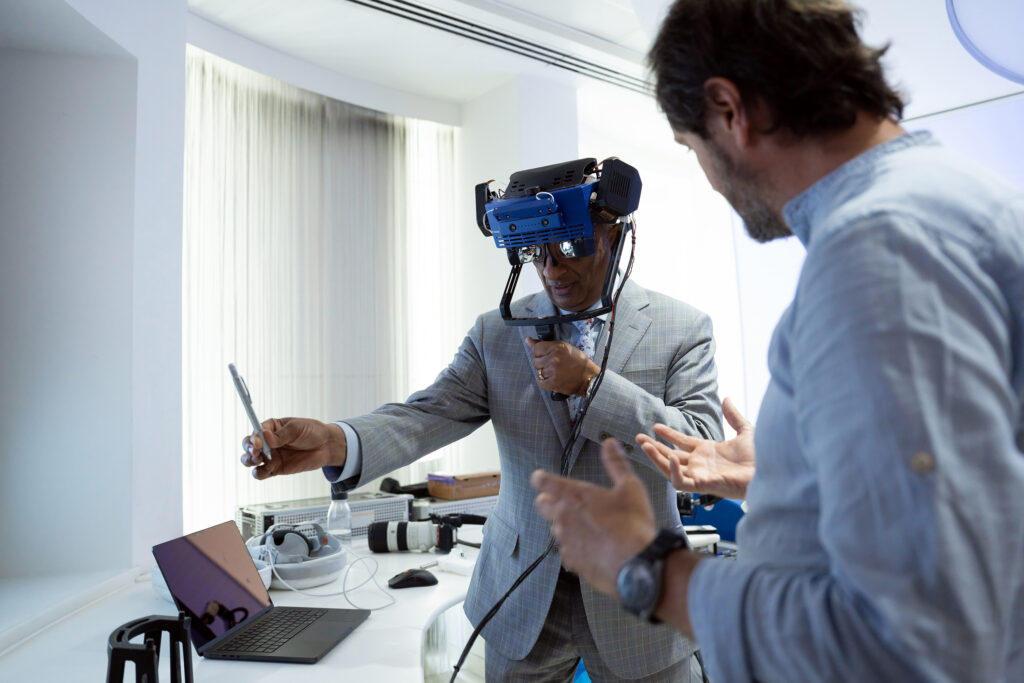
One area of particular interest is markerless registration and tracking. Robotic surgical systems need an accurate understanding of the position and orientation of a patient’s anatomy, and current approaches can involve attaching pins and rigid markers to bone to provide reference points for the system.
Advertisement

The centre will investigate ways of carrying out this tracking without those physical markers. Removing the need for pins and associated hardware could mean fewer incisions for patients while still giving the robotic system the information it needs to accurately track anatomy during an operation.
Computer vision will also form an important part of the programme. Researchers plan to develop systems capable of reading a patient’s anatomy and adapting to it in real time, rather than relying entirely on predetermined information. Combined with improved sensing and tracking, this could help make robotic procedures less invasive and more intuitive for surgeons.
The wider ambition is to make robotic surgery practical beyond the specialist centres where many advanced systems are currently used. That means the engineering challenge is not simply to make a robot more capable; the technology also needs to be straightforward enough to integrate into a broader range of clinical environments.
The centre will be led by Professor Ferdinando Rodriguez y Baena from Imperial’s Department of Mechanical Engineering, who is also co-director of the Hamlyn Centre and leads research into robotics for orthopaedic surgery. At full capacity, it will support a senior postdoctoral researcher and up to seven fully funded PhD studentships, recruited progressively over the five-year programme.
Those researchers will work in the same space as Smith+Nephew engineers and clinicians. For Imperial, the arrangement provides another route for moving engineering research towards practical medical devices, alongside the more established approaches of licensing university technology or creating spinout companies.
Advertisement
Rodriguez y Baena said the centre would allow academic engineers to work “hand-in-hand” with a major industry partner to develop products. Smith+Nephew, meanwhile, will be able to bring its engineering, clinical and industry experience into the research process while technologies are still being developed.
The partnership is particularly focused on advances emerging from areas such as computer vision and sensing, where developments made in engineering laboratories could have direct applications in surgery. Bringing the two organisations together from the outset is intended to make it easier to turn those ideas into systems suitable for clinical adoption.
Vasant Padmanabhan, President of Research & Development, ENT and Emerging Markets at Smith+Nephew, said embedding industry experts within Imperial’s engineering research environment had the potential to move new technologies into operating theatres more quickly, while improving both patient outcomes and the surgical experience.
Ultimately, the centre is aiming for surgical robots that require less invasive hardware, respond more intelligently to individual anatomy and can be used in more clinical settings. If those technologies can move successfully from research into working medical systems, robotic surgery could become accessible well beyond the specialist centres where much of it is concentrated today.