
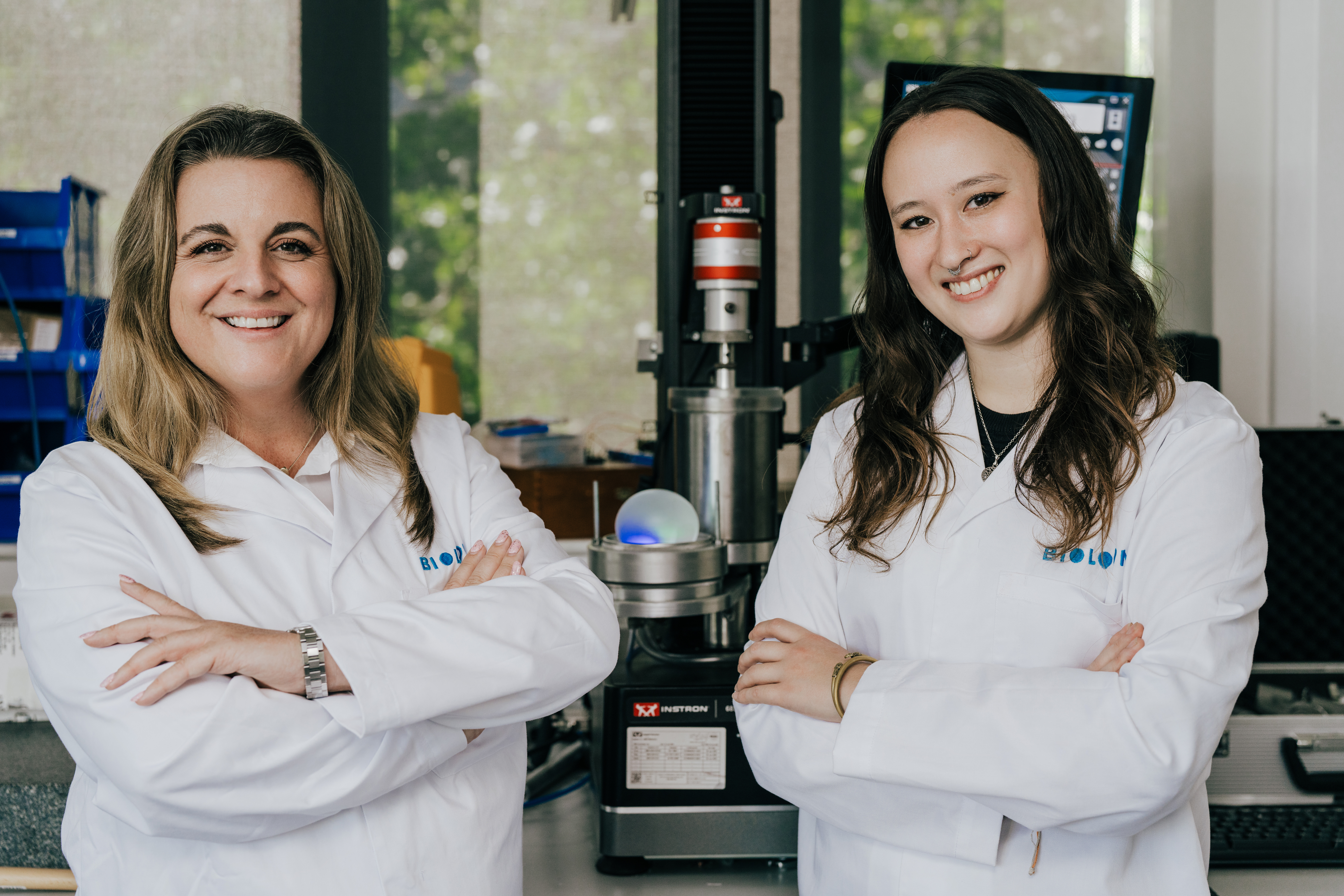
Researchers at Imperial College London have developed a modified latex material for balloons that is designed to break down more quickly after disposal while retaining the strength, elasticity and performance of conventional products.
Developed by the Department of Chemical Engineering, the material aims to reduce the environmental impact of discarded balloons by improving an existing material rather than replacing it altogether. The technology, developed by the research team known as Bioloon, could provide manufacturers with a more sustainable alternative for celebrations and events.
Although many balloons are marketed as biodegradable, conventional latex balloons degrade slowly because of the manufacturing process used to give them their mechanical properties. Natural rubber is typically strengthened using sulphur vulcanisation, which creates cross-links between polymer chains to improve elasticity and durability. While this produces a strong, stretchable material, it also makes balloons much more resistant to natural degradation and relies on chemical additives that can enter the environment.
Rather than developing an entirely new material, the Imperial researchers redesigned the cross-linking process. Their approach links the polymer chains without the conventional additives associated with sulphur vulcanisation, producing a material that performs like a standard balloon while degrading more readily after use.

Advertisement

The researchers say the modified latex can be inflated multiple times, is easier to inflate than conventional balloons and is compatible with existing balloon manufacturing processes, potentially allowing manufacturers to adopt the material without significant changes to production methods.
The project brought together researchers from the Departments of Chemical Engineering, Mechanical Engineering and Aeronautics, combining expertise in polymer chemistry, materials engineering and mechanical behaviour. The work has resulted in a patented technology and the formation of the Bioloon spin-out company, which plans to bring the new balloons to market within the next year.
While balloons were the initial focus, the researchers believe the modified latex could have applications in a wider range of single-use latex products, where improved end-of-life performance is increasingly being sought.
The project also highlights the role universities are playing in translating engineering research into commercial technologies. Developed through Imperial’s ChemEng Enterprise initiative, the work demonstrates how advances in materials engineering can be applied to improve familiar products while addressing broader environmental challenges.