
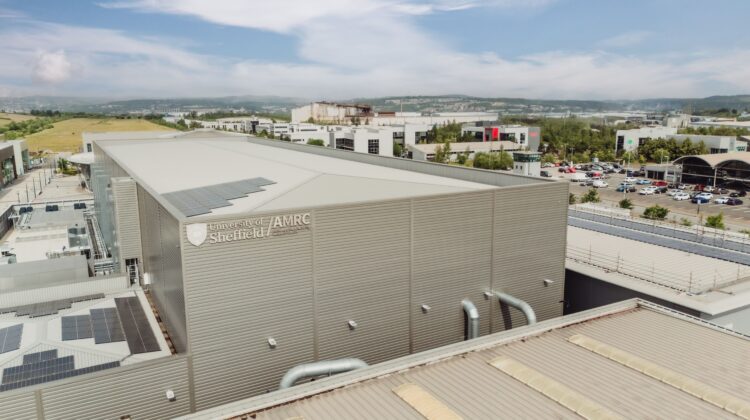
Making aircraft lighter is only part of the challenge facing aerospace manufacturers. The other is finding ways to build increasingly complex composite structures quickly enough to meet growing demand.
A new research facility at the University of Sheffield Advanced Manufacturing Research Centre (AMRC) has been established to help tackle both.
The £54 million Composites at Speed and Scale (COMPASS) centre brings together advanced composites, robotics and digital manufacturing technologies to develop faster production methods for large aircraft structures. Boeing is the facility’s first industrial partner and will use the centre to research automated manufacturing for future aircraft programmes.
Composite materials have transformed aircraft design by offering high strength at a fraction of the weight of traditional metal structures. But manufacturing large composite components remains a slow and expensive process. COMPASS has been built to explore how automation and new manufacturing techniques could increase production rates without sacrificing quality.
Advertisement

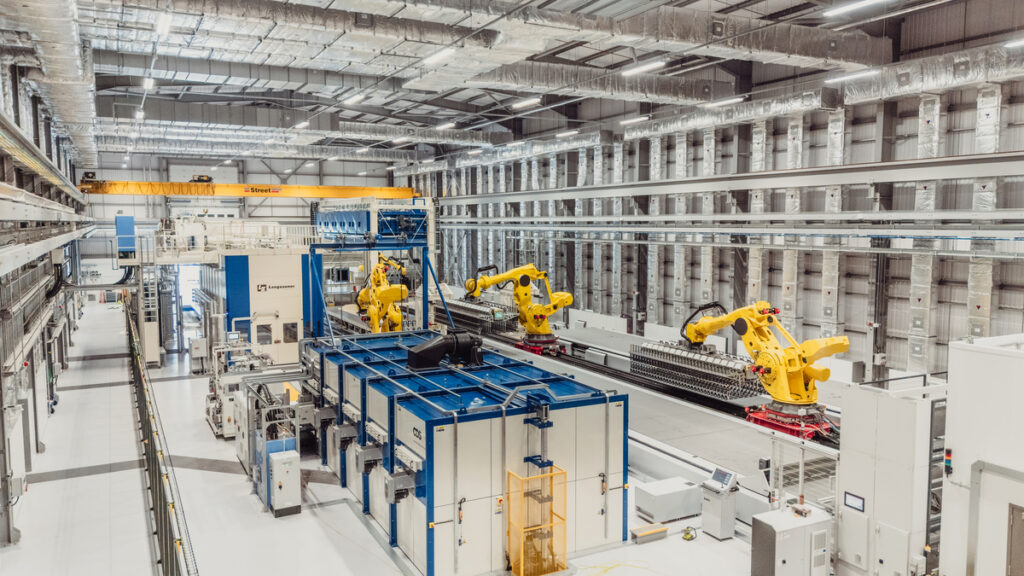
At the heart of the facility is Boeing’s Isothermic High-Rate Sustainable Structures (IHSS) programme, which aims to reduce the manufacturing time for large composite aircraft components from around 40 hours to just four. The work combines automated production systems with advanced materials and digital technologies to investigate how future aircraft could be built at much higher rates.
Unlike a conventional research laboratory, COMPASS operates at an industrial scale. It gives manufacturers access to equipment capable of producing full-size components, allowing new manufacturing processes to be tested and refined before they are introduced onto the factory floor. For smaller companies in particular, that removes one of the biggest barriers to developing new production technologies.
Although aerospace is the initial focus, many of the techniques being developed are expected to have applications beyond aviation. Composite manufacturing is becoming increasingly important in sectors such as renewable energy, defence and advanced transport, where reducing weight while maintaining structural performance is equally important.
Facilities such as COMPASS also reflect a changing role for universities. Increasingly, they are not only developing new manufacturing technologies but providing the environment where researchers and industry can work together to prove them at production scale. The aim is to shorten the journey from laboratory research to commercial manufacturing, helping new engineering ideas find their way into the next generation of products.