
There is a considerable distance between watching a robot perform an impressive demonstration and deciding to install one on your own production line. Will it fit the available space? Can it work with existing equipment? And who will keep it running once the supplier has gone home? For businesses considering automation, these questions can be more pressing than the capabilities of the robot itself.
A new network of eight Robotics Adoption Hubs aims to help organisations work through those decisions. Announced on 9 October with £40 million in government backing, the hubs will give businesses and public services access to independent advice, specialist expertise and opportunities to see and test technologies before committing to investment.
The emphasis is on putting proven systems to work. Each hub will connect potential users with technology suppliers, systems integrators and finance providers, helping them establish where robotics could make a useful contribution and what successful deployment would involve. The network brings together universities, research institutes, local authorities and businesses, with areas of interest ranging from manufacturing and agriculture to surgery and waste management.
For design engineers, the opportunity to test a proposed solution is particularly relevant. A demonstration can show that a machine performs a task; a feasibility study must establish whether it can perform the required task within the constraints of a particular operation. Equipment interfaces, material handling, maintenance access and the people working around the system all become part of the design brief.
Advertisement

The Yorkshire Robotics Adoption Hub will offer vendor-neutral support to manufacturers, including feasibility studies, business cases, live demonstrations, deployment support and workforce training. In South Wales, businesses will have access to independent advice, test-before-invest activity and help finding suitable technology and integration partners. Both approaches should allow organisations to explore their requirements before settling on a particular system.
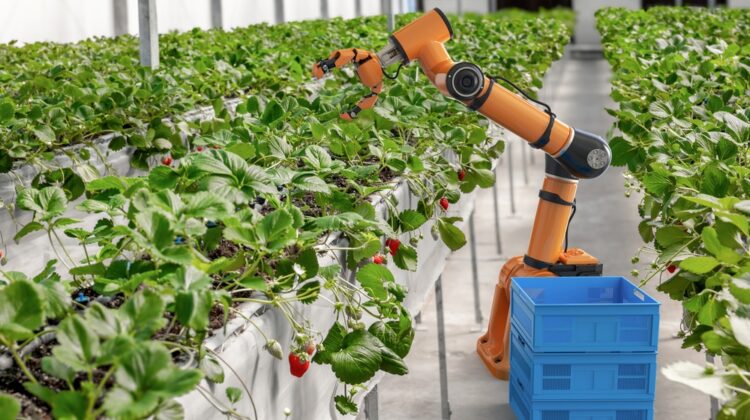
Elsewhere, the HARVEST hub in Lincoln will tackle barriers to robotics adoption across agriculture and food production, using testbeds covering arable farming, fruit, vegetables and food manufacturing. A national waste and recycling hub will help sites assess automation for recovering more materials, while Milton Keynes will focus on robots operating in public spaces, including service robots, drones and self-driving vehicles.
Getting the equipment right is only part of the challenge. The programme is also providing £2.5 million for 12 projects addressing the skills needed to specify, procure, integrate, operate and maintain robotic systems. These include practical training in industrial inspection, courses for engineers working with robot arms and a study into a robotics technician apprenticeship framework.
A further £1.7 million will support AURA, a national body delivered by TWI and Anglia Ruskin University to coordinate the hubs and share knowledge across the network. The programme’s value will ultimately depend on whether that expertise helps organisations move from an interesting demonstration to a system that earns its place in everyday operation.