

Tungsten carbide is one of those materials engineers love, and manufacturers often curse. It's incredibly hard, remarkably wear-resistant, and capable of surviving conditions that would quickly destroy most metals. The downside? It's also notoriously difficult to manufacture. Researchers have now demonstrated a new form of industrial 3D printing that could make producing … [Read more...] about Could 3D printing transform tungsten carbide manufacturing?
Construction
Digital platform aims to speed up early-stage ground movement assessments

A2 Engine has launched a digital platform designed to help engineers assess potential ground movements during the early stages of construction projects. Called Gemma, the software generates outline assessments for projects involving basements, retaining walls and deep excavations, providing an early indication of the possible impact on neighbouring structures before more … [Read more...] about Digital platform aims to speed up early-stage ground movement assessments
Researchers urge lifecycle approach to home retrofits

Home retrofit drive could create future e-waste problem, researchers warn. The UK's push to make homes more energy efficient could create a new waste problem if low-carbon technologies aren't designed with their full lifespan in mind, researchers have warned. Heat pumps, solar panels and home battery systems are expected to play a major role in helping the UK cut carbon … [Read more...] about Researchers urge lifecycle approach to home retrofits
Engineering safer buildings: The latest advances in earthquake-resistant design

The recent earthquakes in Venezuela, which caused widespread structural damage and left thousands affected, have once again highlighted the devastating impact seismic events can have on buildings and infrastructure. While earthquakes themselves cannot be prevented, engineers continue to develop new materials, structural systems and vibration-control technologies designed to … [Read more...] about Engineering safer buildings: The latest advances in earthquake-resistant design
Computer model could enable bridges and buildings that use less material
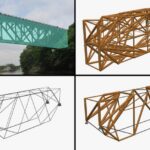
Researchers at MIT have developed an approach for generating more buildable structures, bridging the gap between optimised design and real-world construction. A technique called topology optimisation can design structures that reduce the amount of material used, in some cases by as much as 90 per cent, which would represent a multi-gigatonne reduction in construction-related … [Read more...] about Computer model could enable bridges and buildings that use less material