

Researchers at ETH Zurich and EPFL have developed a particle detector that could simplify one of the biggest engineering challenges in experimental physics: tracking particles in three dimensions without relying on millions of individual detector elements. Many modern particle detectors use scintillating materials that emit tiny flashes of light when struck by charged … [Read more...] about New detector design simplifies particle tracking
Cambridge engineering alumnus co-founds AI imaging start-up

A University of Cambridge engineering graduate has co-founded a deep-tech start-up using artificial intelligence to improve image reconstruction across medicine, science and industry. Andrew Wang, who studied Information and Computer Engineering as part of his Master of Engineering (MEng) degree, is now chief technology officer and co-founder of Paris-based Blur Labs. The … [Read more...] about Cambridge engineering alumnus co-founds AI imaging start-up
Imperial design engineering alumni launch sustainable clothing collaboration
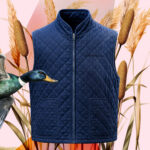
Imperial College London has teamed up with graduate-founded biomaterials company Ponda to launch a range of sustainable university-branded clothing, demonstrating how ideas developed through engineering education can become commercial products. The collaboration will see Imperial-branded apparel insulated with BioPuff®, a plant-based material developed by Bristol-based … [Read more...] about Imperial design engineering alumni launch sustainable clothing collaboration
Researchers urge lifecycle approach to home retrofits

Home retrofit drive could create future e-waste problem, researchers warn. The UK's push to make homes more energy efficient could create a new waste problem if low-carbon technologies aren't designed with their full lifespan in mind, researchers have warned. Heat pumps, solar panels and home battery systems are expected to play a major role in helping the UK cut carbon … [Read more...] about Researchers urge lifecycle approach to home retrofits
Cambridge engineers build robot fish to study how vertebrates first walked
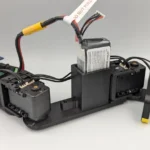
Researchers at the University of Cambridge have developed a fish-like robot that could help explain how some of Earth's earliest vertebrates first learned to walk on land. The project combined engineering, biology and palaeontology to investigate how several modern fish species move across land and whether their movements can shed light on one of evolution's most significant … [Read more...] about Cambridge engineers build robot fish to study how vertebrates first walked