
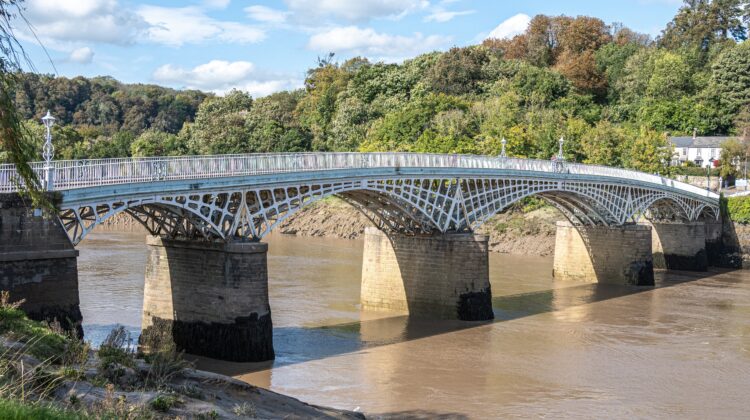
A bridge can stand for two centuries without revealing everything about the metal holding it together. Researchers from the University of Oxford and engineering consultancy WSP will now look beneath the surface of Chepstow’s Old Wye Bridge to understand hidden defects in its cast iron and help guide its conservation.
The Grade I listed structure spans the border between England and Wales and is recognised as the world’s largest pre-1830 cast-iron road bridge. Its rare arch lattice design presents a particular engineering challenge: historic cast iron can behave differently from modern construction materials, while the limited availability of samples calls for specialised testing methods.
The team will examine small samples taken from the bridge, starting with optical and electron microscopy and X-ray diffraction. These techniques will reveal the iron’s microscopic structure, composition and corrosion products, helping researchers understand how it was manufactured and how it has changed with age. They will then use micro-CT scanning to build three-dimensional pictures of internal voids, defects and cracks that cannot be seen from the surface.
Strength and fatigue tests will explore how those flaws affect the material under load. Some tests will take place during CT scanning, allowing the researchers to observe how internal damage develops as the iron deforms and fails. The work will draw on facilities across Oxford’s engineering, materials and geography departments, alongside collaboration with the Diamond Light Source.
Advertisement

‘Assessing the structural capacity of heritage cast iron is incredibly challenging due to its hidden defects and variable microstructures,’ said Dr John Bennetts, WSP’s UK Head of Structures Asset Management. The findings will provide evidence for assessing the bridge’s condition and making decisions about its ongoing management, with Professor Sinan Acikgoz leading Oxford’s material characterisation work.