

A research team from the University of South China and Purdue University has used a machine-learning strategy to generate a new class of ultra-high-strength and -ductility steel for 3D printing that costs less, resists rust and requires only a fraction of the usual processing time. The study demonstrates that integrating artificial intelligence with the fundamental physical … [Read more...] about Machine learning designs cheaper and rust-proof steel for 3D printing
Materials
Researchers create first AI for generative polymer design

A team of materials scientists at Georgia Institute of Technology have created new generative artificial intelligence tools that are similar to Claude and ChatGPT but for designing new materials. The words on this page mean something because they are assembled in a particular order and follow the complex rules of grammar and syntax. Creating new chemical polymers follows a … [Read more...] about Researchers create first AI for generative polymer design
Tiny LED design could power next-generation technology

Researchers from the University of Osaka have developed a new light-emitting diode (LED) design that could help shrink complex optical systems into much smaller devices. The LED produces circularly polarised light using a built-in nanostructured surface, eliminating the need for bulky external optical components. From 3D movie screens to augmented-reality devices, many … [Read more...] about Tiny LED design could power next-generation technology
New ultra-low-cost technique could slash the price of soft robotics
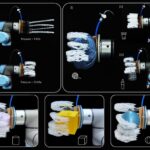
Engineers at the University of Oxford have developed a rapid, ultra-low-cost method for manufacturing soft robots using common lab equipment. The new technique enables researchers to fabricate soft robotic actuators – the flexible components that power movement – in under ten minutes at a material cost of less than US$0.10 per unit. ‘By lowering the financial and … [Read more...] about New ultra-low-cost technique could slash the price of soft robotics
Researchers break the mould with new prosthetic design

Researchers at Simon Fraser University in Canada have developed a new, fully customisable 3D-printed socket design that they say is set to transform the prosthetics industry. The reimagined limb socket interface combines highly personalised pressure mapping with AI software and a lighter infill, creating a highly customised prosthetic that’s more comfortable to wear, for … [Read more...] about Researchers break the mould with new prosthetic design