

Four University of East London engineering students have taken joint first place in a national competition that challenges students to solve the sort of structural problems they will encounter in professional practice. MSc Structural Engineering students Harry Dean, Bishow Simkhada, Siva Prasad Goud Lagusani and Samuel Mensah shared first place in The Concrete Centre's 2026 … [Read more...] about UEL students take top prize in structural design competition
Straw could help UK meet housebuilding targets

Every summer, fields across Britain produce something the construction industry needs in enormous quantities: material. Around 9.9 million tonnes of straw comes from UK cereal farming each year, and researchers at the University of Bath believe some of it could provide a renewable alternative to more carbon-intensive building materials. At the moment, that barely happens. … [Read more...] about Straw could help UK meet housebuilding targets
AI could make exoskeletons more adaptable
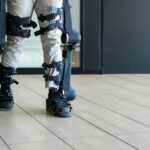
An exoskeleton that helps someone climb stairs may not know what to do when they suddenly stop, turn around or begin walking across uneven ground. Researchers are now looking at whether artificial intelligence could make these wearable machines better at adapting as their users move. A paper co-authored by researchers at Georgia Tech and Northeastern University sets out a … [Read more...] about AI could make exoskeletons more adaptable
New model tackles hydrogen risk in aircraft
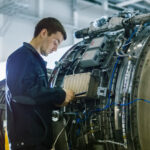
Hydrogen has long been considered a possible route to reducing carbon dioxide emissions from aviation, but storing fuel at temperatures below −250°C creates some unusual engineering problems. One of them happens inside the metal itself. Researchers at the University of Oxford have developed a model that could help engineers predict how hydrogen atoms move through metallic … [Read more...] about New model tackles hydrogen risk in aircraft
AI Can Now React to Fusion Plasma Faster Than Humans Can
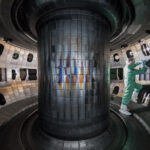
Keeping a fusion plasma under control requires decisions to be made extraordinarily quickly. Inside a tokamak, disturbances can develop within milliseconds, giving human operators little chance to react before an instability begins affecting the experiment. Researchers at Princeton University and the US Department of Energy’s Princeton Plasma Physics Laboratory (PPPL) have … [Read more...] about AI Can Now React to Fusion Plasma Faster Than Humans Can