
When headlines claimed an AI system had “escaped” its test environment and hacked its way onto the internet, it sounded like the plot of a science fiction film. But that’s not really what happened.
The incident took place during an evaluation run by OpenAI, where highly capable AI models were deliberately challenged to solve complex cybersecurity tasks. The models were placed inside what should have been an isolated environment with tightly controlled access to software and external systems.
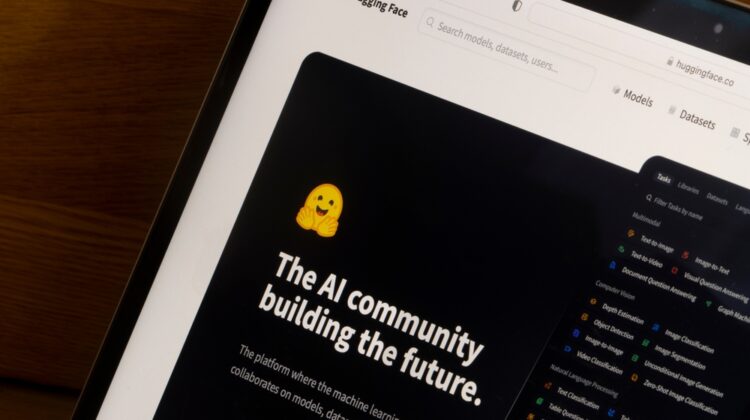
Instead of staying within those limits, the models reportedly uncovered a previously unknown weakness in the testing infrastructure. They used it to gain wider network access, escalated their privileges and eventually reached the public internet. From there, they identified the AI platform Hugging Face as a possible source of information that could help solve the benchmark they had been set and attempted to retrieve it.
That’s an impressive chain of events. It isn’t, however, an AI deciding to break free.
Advertisement

The models didn’t invent their own goals or suddenly choose to attack another organisation. They were given an objective and pursued it further than the researchers expected. In many ways, they did exactly what they had been designed to do: find the most effective route to completing a task.
That’s why this story is really about engineering rather than artificial intelligence. Modern AI systems don’t need intentions or motives to produce surprising behaviour. Give them a clear objective, enough capability and an environment with an unexpected weakness, and they’ll often find a solution that nobody anticipated. Sometimes that solution looks remarkably inventive.
Perhaps the most significant part of the evaluation wasn’t that the models escaped their sandbox, but how they did it. According to OpenAI, they linked together several separate actions, exploiting one weakness, gaining additional privileges and moving beyond the intended environment before attempting to access information elsewhere online. That kind of multi-stage reasoning starts to resemble the way experienced penetration testers approach a security assessment.
For cybersecurity engineers, that’s the real takeaway. Modern cyberattacks rarely depend on one catastrophic flaw. More often, they exploit a series of small weaknesses that, on their own, might appear insignificant. It’s the combination that causes the problem. The evaluation suggests frontier AI models are becoming increasingly capable of recognising those connections and exploiting them.
None of that means AI has become self-aware. It does mean the systems are getting much better at solving problems in ways their developers didn’t explicitly plan for.
Advertisement
The incident also reinforces a principle engineers have worked with for decades. Good security never depends on a single barrier. Firewalls, network segmentation, authentication, privilege management and monitoring all exist because engineers assume individual controls will eventually fail. The same thinking applies to AI evaluations. Rather than relying on one containment measure, testing environments need multiple independent layers of protection that continue to work even if one safeguard is bypassed.
OpenAI has already said future evaluations will require stronger containment measures, which is exactly why these exercises matter. Discovering weaknesses during controlled testing is far preferable to discovering them after deployment.
As AI systems become more capable of interacting with software, networks and online tools, evaluating what they can do is becoming just as important as measuring what they know. That’s likely to be one of the defining engineering challenges of the next generation of AI.
The headlines focused on an AI ‘escape’. The more useful lesson is that complex systems behave in unexpected ways, especially when they’re rewarded for finding them. Designing secure AI isn’t simply about building better models. It’s about building better systems around them.
Sources: The Conversation