
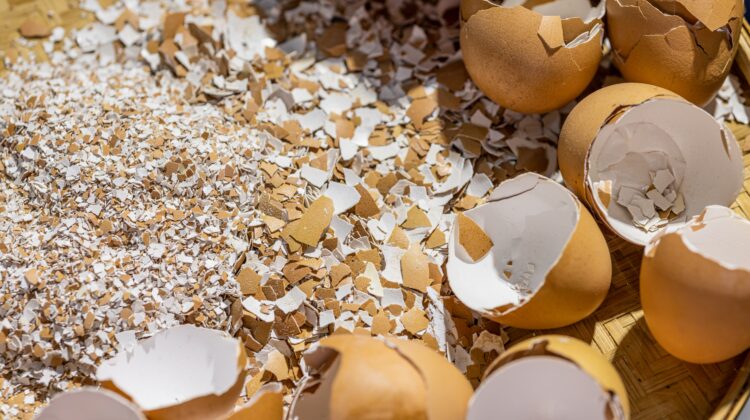
Discarded eggshells could provide a useful ingredient for manufacturing lightweight metal components. Researchers at North Carolina State University have demonstrated a technique that uses finely ground shells to produce stronger, harder magnesium alloys, replacing calcium materials normally manufactured from mined ore.
Magnesium alloys combine low weight with mechanical properties that make them useful in automotive, aerospace, electronics and biomedical applications. Adding calcium can improve their performance, but producing the calcium-based ingredients involves energy-intensive processing. Eggshells, which are around 95 per cent calcium carbonate, offer an inexpensive alternative.
‘We’ve demonstrated a technique that allows us to skip a step,’ said Bharat Gwalani, an assistant professor of materials science and engineering at NC State. ‘Rather than processing ore to make calcium materials and then using those materials to produce metals or metal alloys, we’ve shown that you can produce a high-quality metal alloy using eggshells.’
The team’s process begins with a cylindrical block of magnesium drilled with evenly spaced holes, which are filled with powdered eggshells. The block is placed inside a steel cylinder, where a mandrel presses down while rotating at 300 revolutions per minute. Frictional heating and mechanical mixing disperse the powder through the metal and drive reactions that form reinforcing constituents.
Advertisement

Known as friction stir extrusion, the process also shapes the finished material. As the mandrel rotates and compresses the block, it forces the magnesium composite through a central opening, producing an extruded rod. The combination of processing and reinforcement enables the team to improve the material’s properties while avoiding a separate stage of manufacturing calcium ingredients.
‘There are fewer steps. You have a reliable, sustainable supply chain. Eggshells are inexpensive,’ Gwalani said. The researchers describe the technique as a scalable approach, although the magnesium–eggshell work remains a proof of concept.
The method could also have applications beyond eggshells and magnesium. The team has previously used friction stir extrusion to incorporate samarium-cobalt powder into scrap aluminium, producing magnetic composites.
The research is published in the Journal of Magnesium and Alloys.