

Most attempts to reduce aviation’s climate impact focus on what powers an aircraft. A new UK-led trial is looking instead at where an aircraft flies, testing whether relatively small changes in altitude could prevent some of the condensation trails that contribute to global warming. Operation Blue Skies will conduct what its partners describe as the world’s first … [Read more...] about UK airspace trial to test whether changing flight paths can reduce contrails
Technology
NASA’s Roman Space Telescope launches to map the dark universe
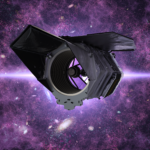
Space telescopes have traditionally faced a trade-off. They can look deeply into a small patch of the universe, revealing distant galaxies in remarkable detail, but surveying enormous areas of sky at that resolution takes time. NASA’s newly launched Nancy Grace Roman Space Telescope has been designed to change that equation. Roman lifted off from Kennedy Space Center in … [Read more...] about NASA’s Roman Space Telescope launches to map the dark universe
Imperial College London launches centre to advance surgical robotics

Robotic surgery can give surgeons greater precision and consistency, but many of the most advanced systems remain concentrated in specialist centres. A new collaboration between engineers at Imperial College London and Smith+Nephew aims to widen access by accelerating the development of technologies for robotic musculoskeletal surgery. The five-year partnership has … [Read more...] about Imperial College London launches centre to advance surgical robotics
Unexpected plasma process could reshape graphene oxide production

Some engineering breakthroughs arrive after years of carefully pursuing a single objective. Others appear almost by accident. Researchers at Texas A&M University were investigating new ways to produce hydrogen when they realised the carbon left behind wasn't simply a by-product. It was graphene oxide, one of the most widely used carbon nanomaterials in energy storage, … [Read more...] about Unexpected plasma process could reshape graphene oxide production
Origami-inspired mechanism could give robots the ability to change shape

Most robots are designed to do one job well. A wheeled robot can move quickly across smooth ground, while a four-legged machine is better suited to uneven terrain. The problem is that once a robot is built, its shape is largely fixed. Researchers at King's College London believe that could eventually change. Working with collaborators in China, the team has completed what … [Read more...] about Origami-inspired mechanism could give robots the ability to change shape