
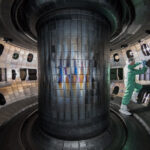
Keeping a fusion plasma under control requires decisions to be made extraordinarily quickly. Inside a tokamak, disturbances can develop within milliseconds, giving human operators little chance to react before an instability begins affecting the experiment. Researchers at Princeton University and the US Department of Energy’s Princeton Plasma Physics Laboratory (PPPL) have … [Read more...] about AI Can Now React to Fusion Plasma Faster Than Humans Can
Oxford, UCL and Imperial Join Forces to Rethink How AI Research Is Done

Some of the biggest advances in artificial intelligence have emerged from industrial research labs with enormous computing resources, large multidisciplinary teams and the freedom to pursue ambitious ideas at speed. UK universities now want to see whether academia can compete by changing the way AI research itself is organised. The University of Oxford, University College … [Read more...] about Oxford, UCL and Imperial Join Forces to Rethink How AI Research Is Done
MIT Rethinks the Qubit to Make Quantum Computers Faster and More Reliable

Quantum computers have an unusual problem: the more useful their qubits need to become, the easier it can be to disturb them. Qubits must hold quantum information for long enough to perform a calculation, but they also need to communicate with other parts of the computer quickly and reliably. Improving one of those abilities can come at the expense of the other. Researchers … [Read more...] about MIT Rethinks the Qubit to Make Quantum Computers Faster and More Reliable
Reimagining the Battery: When the Structure Becomes the Energy Store

What if an electric bicycle’s frame was also its battery? Or an aircraft wing could store some of the electricity needed to power the aircraft? A new UK research programme is exploring a future in which batteries are no longer separate objects hidden inside products, but become part of the structures themselves. Researchers at Imperial College London, Durham University and … [Read more...] about Reimagining the Battery: When the Structure Becomes the Energy Store
UK airspace trial to test whether changing flight paths can reduce contrails

Most attempts to reduce aviation’s climate impact focus on what powers an aircraft. A new UK-led trial is looking instead at where an aircraft flies, testing whether relatively small changes in altitude could prevent some of the condensation trails that contribute to global warming. Operation Blue Skies will conduct what its partners describe as the world’s first … [Read more...] about UK airspace trial to test whether changing flight paths can reduce contrails